
This webinar will showcase experiences of the Republic of Korea and Japan in recognizing qualifications conducted through non-traditional learning modes.

Date and time: 20 November 2026 – 14:00 to 15:00 (Bangkok, GMT+7)
Format: Online via Zoom (prior registration required)
Target audience: Policymakers and higher education stakeholders based in Asia and the Pacific
Languages: English
Background
Rising access to higher education and cross-border student mobility are two defining features of the
contemporary higher education landscape. Global tertiary enrollment has more than doubled over the
past two decades – from about 100 million in 2000 to 269 million in 2024 – with an average participation
rate of 43%. Concurrently, internationally mobile students reached nearly 7 million in 2024. (UNESCO,
2026)
However, this expansion does not guarantee equitable opportunities. Traditional, linear higher education
models often fail to serve non-traditional learners, including working professionals, refugees (only 9% of
whom participate in higher education), and vulnerable groups who require flexible learning options. As
diverse learning pathways – such as distance learning and prior learning experiences – are becoming more
common, the need of transparent and fair recognition frameworks is increasing for lifelong learning and
mobility.
As we enter the final years to achieve Sustainable Development Goals 4 on Quality Education, higher
education systems should be prepared to integrate and recognize non-traditional learning pathways. Ensuring the formal recognition and validation of these diverse learning outcomes is essential to building
flexible learning ecosystems, bridging gaps and promoting the access to higher education.
UNESCO’s Global and Tokyo Conventions on Higher Education provide inclusive frameworks that support
the fair, transparent and timely recognition of qualifications globally and in the Asia-Pacific region. Both
Conventions establish the right of learners to have their qualifications and partial studies assessed and
recognized in a fair, transparent and timely manner, regardless of mode of delivery, and including
qualifications held by refugees and displaced persons. The Global Convention goes further in applying the
same principles to recognition of prior learning. To translate these principles into practice, countries in
the Asia-Pacific have been exploring different practices to recognize qualifications delivered through non
traditional modes.
About the webinars
This webinar is the fifth in a series developed in cooperation with the Bureau of the Tokyo Convention, aimed at promoting cooperation on qualifications recognition within Asia-Pacific and increasing understanding of the Tokyo Convention and Global Convention in the region.
The Asia-Pacific webinar series brings together policymakers to explore how national systems can better support the recognition of qualifications for lifelong learning, skills development, and employment opportunities to serve national development goals. Following this fifth webinar, one additional webinar will be organised in January 2027.
Objectives
This webinar is the fifth in a series developed in cooperation with the Bureau of the Tokyo Convention
and APNNIC, aimed at promoting cooperation on qualifications recognition within the Asia Pacific and
increasing understanding of the Tokyo Convention and Global Convention on Higher Education in the
region.
It aims to:
- share trends in the Republic of Korea and Japan on higher education conducted through non-traditional learning modes and recognizing non-traditional learning conducted in foreign countries;
- discuss how countries in the Asia-Pacific can collaborate to promote recognition of learning
conducted through non-traditional learning modes to support academic mobility and access to
further studies and employment.
Why you should attend
Participants will gain:
- Lessons from experiences of the Republic of Korea and Japan in recognizing of qualifications conducted in non-traditional learning modes
- Opportunities to engage with regional policymakers and experts on strengthening national systems and collaboration through APNNIC
Who should attend
- Policymakers and government education officials
- Researchers and civil society organizations
- Higher education personnel
- Students and youth
- Members of APNNIC
Programme
| 14:00 – 14:05 | Opening and introduction Representative of UNESCO Regional Office in Bangkok and Office for UN Coordination for Asia and the Pacific (UNESCO Bangkok), Secretariat of the Tokyo Convention and APNNIC | |
| 14:05 – 14:45 | Presentation: Non-traditional Learning Pathways and Their Recognition: the cases of Republic of Korea and Japan Ms. JungEun Lee, Director, Korea Academic Recognition Information Center (KARIC), Republic of Korea Prof. Rie MORI, National Institution for Academic Degrees and Quality Enhancement of Higher Education (NIAD-QE), Executive Director of the National Information Center for Academic Recognition Japan (NIC-Japan) | |
| 14:45 – 14:55 | Discussion: How can Asia-Pacific countries collaborate to promote recognition of learning conducted through non-traditional learning modes? Moderator: UNESCO Bangkok, Secretariat of the Tokyo Convention and APNNIC | |
| 14:55 – 15:00 | Wrap up Representative of UNESCO Bangkok, Secretariat of the Tokyo Convention and APNNIC |
Speakers
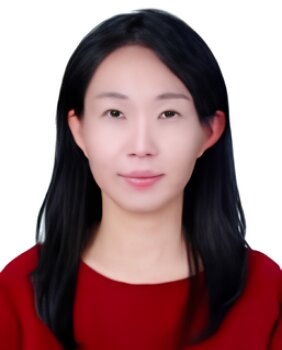
Ms. JungEun Lee is Director of Korea Academic Recognition and Information Center (KARIC), Republic of Korea. She has been involved in establishing KARIC since 2016. She serves as First Vice-President of the Tokyo Convention committee and the APNNIC Bureau for 2026-2027. She is a member of the Open-ended Working Group on the Draft Subsidiary Text under the UNESCO Global Convention. She holds a master’s degree in higher education and is a PhD candidate in global education cooperation at Seoul National University.

Prof. Rie Mori is a Professor at the National Institution for Academic Degrees and Quality Enhancement of Higher Education (NIAD-QE) and the Executive Director of the National Information Centre for Academic Recognition Japan. She earned a BA and an MA from Waseda University and joined the National Institution for Academic Degrees (NIAD) before its reorganization to NIAD-QE as a Research Fellow. Her prime research interest is the accreditation of higher education institutions that ensures the legitimacy of higher education credentials, including degrees earned in nontraditional ways such as personal credit-hour accumulation. She was a visiting researcher at the New England Association for Schools and Colleges (now New England Commission of Higher Education) and Boston College (2004-5). Her recent publications include: Mori, R. (2016) “In Defense of Japanese Liberal Education”, Liberal Education, Association of American Colleges and Universities, Vol. 101:4/102:1, Fall 2015/Winter 2016, pp.72-75, Washington DC.